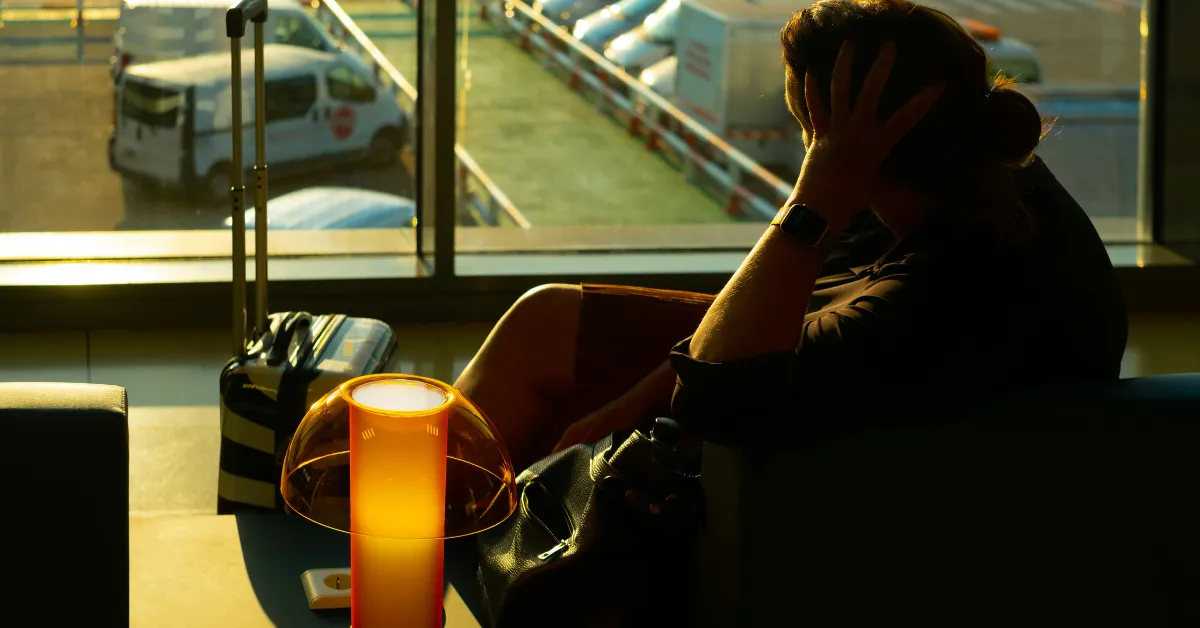
I’d be lying if I said the first clue that my body started acting differently was some dramatic “aha” moment. Instead, my body started speaking up in little ways throughout the day, giving me reminders I couldn’t ignore.
It was saying, “Hey, we don’t move like we used to, girl. Stretch, move, twist, bend, do all those things often or you’ll ache more than you need to.” Back then, my body didn’t send those signals, or maybe it did, subtly, and I was too young to notice.
Not that it was a smart thing to do, but I skipped warming up and cooling down properly. A few arm swings, a calf stretch here and there, maybe a half-hearted child’s pose, and that was it. Now? I need a full ten-minute warm-up, seven to ten minutes to cool down, and yes, a little stretch before bed.
Skip it, and my body reminds me in the most annoying ways: late-night achy trips to the bathroom. Fun times. And my bladder had its own ideas about how things should go. The only time I dealt with this kind of interruption was when I was pregnant with my son over 25 years ago.
During the day, those reminders keep coming. Since I’m a laptop jockey, mini breaks throughout work sessions are a must: wrists, neck, lower back. Everything needs to be shaken out, rotated, loosened, stretched. I sound like a car, which is more truth than not.
Movement is only part of it, fueling my body matters just as much. Before this stage in life, “healthy” to me meant not being sick or broken. If I could eat anything and not get ill, I figured I was fine. I was far off. Heavy comfort food slows me down. My stomach turns upside down, my internal system stalls, and my mind drags. Sometimes it feels like I need a whole recovery day.
But when I fuel my body with what it needs, it wants to move. My mind works. I operate better. I feel alive. That’s when the switch flipped. I started caring about how I move, what I eat, and what I feed my mind.
Nowhere in the imaginary manual of life did I think staying healthy after 40 would mean fueling, moving, and thinking differently.
Redefining ‘Healthy’
Embarrassingly, I have to admit there was a time I did absolutely nothing for my health. I assumed my body would always bounce back naturally.
Along the way, I realized I wasn’t always eating the right things to help it last, and I ignorantly believed it could pull what it needed from some made-up pool of healthy stuff, as if that alone could keep everything running without ever falling sick or breaking down.
I had no discipline in how I fed or treated my body and mind. I was reckless. For over 25 years, I worked 9-to-5 jobs, treating my health like an accordion: overate, didn’t eat, ate anything and everything. I worked more than eight hours a day, sometimes six days a week. External stress constantly interrupted my internal peace. My health suffered too, though I didn’t even realize it until I finally left the office workforce. I was done and burnt out.

When I did anything health-driven, it wasn’t really for the sake of being healthy. Mostly, I tried it when it was new or if I liked it. For example, meditation caught my eye since manifesting what I wanted in life sounded intriguing. And if I ate more veggies and fruits, it was because the dish looked good, tasted good, and hooked me in.
Looking back, I only acted on what felt, tasted, or seemed good, not thinking about how my health could be affected. Just because something feels good doesn’t mean it’s good for me.
Now everything matters, how I move, the relationships I nurture, and the food that fuels me affect my health.
Listening to the Body (Nutrition + Energy)
In my mind, everything that tasted good worked because all food gives energy, right? Yeah, no. I learned I was absolutely wrong. Different foods work in different ways.
There’s maintenance that needs to happen under the hood. How’s it going to run if I don’t fuel it right? The engine won’t operate on good deeds and happy thoughts anymore. It needs fuel. And not just any fuel.
Back in the day, my engine ran on unleaded: fried foods, noodles, heavy carbs. Now I run on premium: low-carb, protein-rich, vitamin-rich foods, veggies and fruit, the colorful ones.
On lazy days, when I reach for comfort food, my engine lets me know loud and clear it was a bad decision.
Fried chicken, chili cheese fries, and waffles are comforting. They work when I’m sad or emotional, but they don’t help my body function properly. My stomach can no longer process those foods like it used to. I ache. I’m backed up in more ways than one. Sluggish, swollen from the sodium, bloated, all the things that work in the opposite way.

Any meat that wasn’t ground used to keep me full and provide protein, and I ate it pretty often. There was nothing like a nice beef steak cut, medium rare please and thank you. Now, nope. My digestive system isn’t having it, so I treat it like a special treat.
All of these experiences taught me that my body gives signals when it’s off. I lack energy when there’s no color on my plate, veggies and fruit. I bloat when I don’t drink enough water. When I give in to cravings, like comfort food or sweet and savory bites, my body wants to shut down. By the end of the day, my body is restless from inactivity and uncomfortable from what I ate. That then leads into oversleeping and waking up sluggish, or not getting enough rest, leaving me fatigued and drained.
Unconsciously I started to relate color with ‘this is good for you, put this in your meal’. So I try to include green, red, yellow, even golden into my meals knowing they’ll provide the vitamins I need. And yes, it’s a weird approach to building nutrition after 40. Then I came to find out it actually works. Not all colors taste good naturally, but they can with help and effort.
Movement That Matches Your Life
I used to see exercise as a way to lose weight, a way to stay athletic, which wasn’t fun for me. I never stuck to a routine and disliked the gym. Machines confused me. Treadmills were boring. Strength and conditioning? Not a fan. I didn’t have a good relationship with exercise before my 40s.
Then my body started to stall. My appetite was all over the place. I would eat, then not eat. When I did eat, it wasn’t always the right stuff, and I’d overdo it, leaving me sluggish and unmotivated to move. Around 40, it all caught up with me. I noticed I was getting thicker in all the wrong places. I wasn’t active.
Wanting to feel good again in every way, I started exploring different ways to move. That’s when exercise became “movement” and training. I took up self-defense, yoga flows, strength training (which I swore I’d never try, then realized I love it), then moved into CrossFit, functional training, calisthenics, mobility work, anything that makes my body feel strong and good. There’s nothing like feeling tired, worn out, flexible, and strong all at the same time.

I don’t train in self-defense as often as I’d like because I travel constantly. When I first started my nomad lifestyle, I was doing CrossFit, dropping into gyms wherever I could. Then I had to figure out how to move without depending on a gym. Sometimes I had a pull-up bar, dumbbells, plates, or a bar. Other times, I had no equipment at all, so resistance bands became my weekly strength tool. YouTube became my plug-and-play trainer for calisthenics, mobility, functional training, and boxing. I don’t have to think, I just follow along.
Here’s how I split my training now:
Monday – Full Body Strength plus Boxing
Tuesday – Upper Body Strength
Wednesday – Lower Body Strength
Thursday – Mobility Focus
Friday – Full Body Strength plus Boxing
Saturday – Legs/Glutes plus Core
Sunday – Active Recovery, walk, stretch, or rest depending on my energy
My body gives me clear signals. When I’m anxious, restless, or fussy, it’s telling me to move. When I’m babbling nonsense, can’t see or think straight, or just don’t want to move, that’s a clear sign I need rest.
All movement feels right to me. Of course, like everything else in life, there’s a time and place for different movements. As much as I love hitting and choking things, I’m not always up for sparring or hitting a bag. I don’t always want to hold a reverse warrior pose for more than a few breaths.
What I stopped doing because it didn’t feel right anymore was being still. I cannot be stationary. Resting is one thing, but being stationary? I don’t know how to do that anymore. It doesn’t have to be anything grand. Bending over to touch my toes for a few minutes, or walking around outside or inside, is enough.
Moving this way helps clear my head. Keeps my mood even. Makes my day work better.
The Mental + Emotional Health
Stress comes in different packages. When life overwhelms me, I usually lean into my routines, movement and journaling, to process emotions and clear my head, making space to understand or find solutions. But some stress shows up differently.
Then there’s the mental side, the driver behind the wheel. That driver used to be sharp, quick to reroute when life detoured. Now it needs a little assistance. Fog sets in, words go missing, I forget what I was doing two seconds ago, sometimes even how to ask for directions. When my mind gets overstimulated, my body feels it differently than it used to.
A recent experience really brought all of this to the surface. I come from a big, close family. Seeing my family go through hardship, or losing one of them, emotionally consumes me and throws me off completely. A few months ago, an auntie passed away, and it hit hard.
When being away from it all, across the country, I could grieve in my own way. Going back home to Hawai’i to attend her service, celebrate her, and be with my family was a different emotion. So many dynamics. Grieving, being present, supporting each other, it consumed every moment.
No routine was followed. I got up and moved when my body told me to. I rested when my body told me to, even though those moments were few. Everything I did was dictated by my energy, not by any schedule. It was only after leaving and recovering from that trip that I could form and keep my routines again.

I used to ignore mental exhaustion. Not good. Now, if I’m mentally beat, I’ll tire my body out with movement to get my whole self into a resting state. Or if my body won’t move, I’ll pause, breathe, and use gentle motion to sync body and mind and shut it all down.
When I need a moment to pause and reset, I journal any thoughts, even the ones that don’t make sense, which is most of the time. Breathing works the same. When I’m anxious, overwhelmed, or emotional, I’ll take a few deep breaths. Being offline, reading a book, or just doing self-care helps me reset. My self-care usually involves my face roller, under-eye patches, and sitting with awareness of my body as a whole. Thoughts of “how can I love on my body?” help me reset.
I’m still figuring this out. It’s an ongoing learning process for me. I have no idea why slowing down in my brain feels like not doing enough. Now I do. It came from my upbringing. My parents never said, “You’re not doing enough.” But the environment was all about work. My dad had two jobs. My mom worked eight hour plus days to support our family. There was always an act of doing. So when I’m not doing, when I’m slowing down, it feels like I’m not doing enough.
But now because I prioritize myself, which was a challenge in itself for years to put me first, the battle still continues on not feeling guilty. It’s still there, it will never go away. Just how I choose to allow it to affect me has changed. Some days it gets me, and mental self-sabotage wants to kick in. Other days I just acknowledge it and let it float on by, like a cloud.
Community + Connection for Health
I am more than comfortable with my own company and enjoy being alone. Solo dates are some of my favorites. Don’t get me wrong, I’m not anti-people. I do get lonely. Even I crave connection.
It’s the act of caring for another person’s well-being, or the short stretch of good conversation and human interaction, that brightens my energy and gives me a healthy boost of companionship.
When I need a reset from being alone, I notice my mental health and energy start to dip. ’Spiral’ is dramatic, but it’s that sense of needing human connection, not necessarily the physical kind, that lifts my mood and brings a spark of happiness to my well-being.
Connections with loved ones recharge me the most. Weekly or monthly phone calls with my son and his family, check-ins with my parents and brother, and random pokes to other loved ones I haven’t heard from in a while, all of it fills my cup.
Even brief interactions with strangers make a difference. A short chat in the pre-TSA line, a small connection with another traveler, can brighten a moment in a meaningful way, reminding me that I’m part of a wider world.

Being constantly on the move, I find small ways to stay connected and keep my energy lifted. That’s where social platforms come in. It’s another way to check in without actually being in the room, but I get to see what others are up to, and they see me. I don’t post daily or even weekly, but I do share stories or reels to let family and friends know I’m around. Sometimes those posts spark offline communication via texts or direct messages, and that always makes me smile.
Sharing posts with loved ones, ones we like, think are funny, or that remind us of each other, is another way we connect. No words exchanged, sometimes reactions, sometimes replies.
Mostly, though, social platforms and texting are my lifelines for staying connected, and showing up in small ways has become part of how I take care of myself. Each small act reminds me that even a tiny touchpoint keeps my mind and energy in a good place.
Consistency Without Burning Out
Understanding and accepting that consistency doesn’t need to look a certain way. When a routine falls to the wayside, I start again.
Before, that was the end of it until I got a wild hair and picked things back up on a whim. Not now, brown cow. I’m consistent in getting back on track. Maybe I skip a day or a week because life or emotions demand it, but I never skip the restart.
Even the tiniest moves give me a sense of accomplishment. Getting up and moving, completing at least one of my daily commitments, and noticing how I feel all count as wins that keep me moving forward.
When I’m traveling, recovery always comes first. I factor in two to four days of downtime, which puts my daily health routines on pause. Movement happens, but minimal. Meals lean more carb-heavy. Journaling and self-reflection may not be daily, but done in spurts.
The routines are broken up into habits my body and mind know they can reach for when they need to recover. Even when routines pause, the habits remain.

In these moments, I reassess, adjust, and figure out how I want to continue. Redirecting my energy instead of letting myself get stuck because things aren’t aligning the way I want them to look like.
Staying in Tune
My definition of health at this point in my life is simple: doing my best to keep my mind and body happy and functioning well.
If that means moving regularly to keep my body from malfunctioning, then I move. If it means reading, journaling, or diving deeper mentally to keep my mind right so I can be gentle and kind to others, then I do that.
It’s the act of showing up for myself, that’s what I’m realizing.
I’d tell my younger self to be more adamant about finding things that make your body and mind feel good. Don’t wait for the warning signs. I wouldn’t completely change the soundtrack; I’d just add more reverb or bass, make it fuller.
What keeps me consistent without pressure is this…listening to my body, doing what fits and what feels good for me.
If you want a simple way to map out your days while keeping the pressure off, the Daily Routine Planner is here.