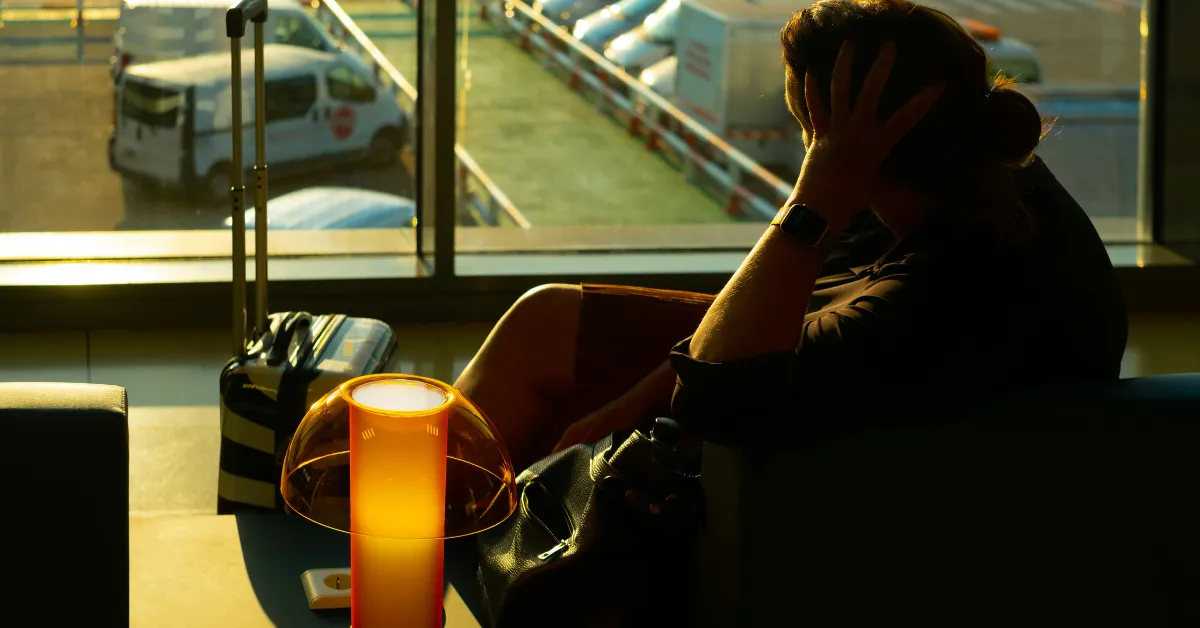
The moment I step off a plane, my body knows where I’ve landed before my mind catches up.
In Hawai‘i, it’s the humidity and the freshness in the air. My breathing slows down, my body recognizes home.
If I am on the mainland and in Texas or Tennessee in the hotter months, the humid air is thick and I feel it in my chest right away.
Los Angeles is a different story. I don’t even need to look out the window. My chest gets heavy the minute I hit that smog. Funny, not funny.
Once I’m settled into my lodging and I stop moving, the lag hits. My body feels off, like it’s a few beats behind the day. The clock says one thing, but my energy says another. That’s the mind and body tug of war that happens every time I travel.
Somewhere along the way I stopped fighting the lag and started paying attention to it. It took a few trips to recognize that feeling for what it was, not something to fix but something to move through.
That’s what staying healthy while traveling really comes down to, paying attention.
Paying attention matters more than any travel wellness tip ever will.
Now I know exactly when I’m out of rhythm and why.
When I finally saw what was off, the next thing was figuring out how long it takes me to feel grounded again.
I can read the signs now, but I still have to wait it out. My body decides when we’re good again.
There is no advice that could have prepared me for how travel feels in your forties. The only way to learn it is to live it. To notice how the body reacts, how it adjusts, how it talks back.
Every trip resets the rules, and no two ever feel the same. Each one teaches something different. Every landing starts a new conversation with myself.
Quick note: Some links in this post are affiliate links, meaning I may earn a small commission if you buy. No extra cost to you. I only link to things I’ve used and genuinely think is worth it. [Full disclosure here]

Adjusting to New Environments
The way my body reacts to different places is wild.
Austin hit me pretty hard. The heat and humidity drained my energy fast. Allergies acted up, motivation dropped, and my body felt sluggish for the first couple of days.
Once I let myself rest, things started to shift. I began easing into movement, stretching or walking in the early mornings to see if it would help. The cooler air made it easier to breathe and move. The slow stretches I do are in my Stretch & Strengthen Guide, the one I use is linked here if you want to try it yourself.
Early movement set the tone for the rest of the day: how I ate, how I moved, how I showed up. Austin’s laid-back energy ended up matching my recovery pace.
These small choices became my version of healthy travel habits, helping my body find its groove again.
After a few mornings, my body started syncing with the rhythm of the sunrise. I’d wake before the sun, walk while the air was still cool, get my heart rate up, then move into my day. Little by little, I started to feel like myself again.

Atlanta was different. The humidity still hung in the air, but the energy was heavier, more crowded. Even with that, I found my footing faster there.
The neighborhood I stayed in had an early-bird rhythm. By five a.m. people were already up, leaving for work. Hearing that going on outside gave me a push. I’d get up, stretch, and walk while the morning was still quiet.
Lush trees and all that green grounded me in a way I didn’t expect. That Southern pace, slower in some ways but hardworking at its core, matched me. It kept me awake, alert, and moving.
Mount Vernon surprised me. Smaller town, slower pace, quieter mornings. The less noise around me, the easier it is to hear myself think.
My body actually decompresses when there’s less stimulation. My energy shot up, my sleep got deeper, and my focus came back. My digestion resets, my lungs feel clearer, and recovery happens faster here than anywhere else I’ve been.
The difference between this and the cities is night and day. Big-city energy takes a toll, and my body keeps the score.

Altitude, humidity, and air quality all leave fingerprints on me.
Humidity swells my hands and feet and makes me feel heavy. Dry air makes my skin itchy. Altitude messes with my head, sometimes making me dizzy or lightheaded.
When that happens, I eat something to balance the nausea, spend less time on screens, and get outside for sunlight and air. Early morning walks help too. Even in humid weather, moving before the day heats up keeps me from feeling stiff and sluggish.
Warmer places change everything: my thirsty spells, my appetite, my sleep.
In heat and humidity, I’m constantly thirsty and snacky, not starving but searching for energy through food. My sleep takes a hit until my body finds its rhythm again.
It usually takes two or three days to adjust. During summer, the long daylight tricks me into staying up later, like my body has FOMO even though I don’t want to do anything.
When I finally get to that point of exhaustion, it still takes a full day for my sleep to catch up.
This time, Mount Vernon had everything that worked with me instead of against me. Crisp morning air clears my lungs, midmorning sun keeps my energy up, and colder nights help me sleep deeper and longer.
Out of the three most recent places I’ve been, this is where recovery came easiest. It’s one of those towns that actually has seasons, so I know it won’t always feel like this, but right now, this environment fits.
These days, when I land somewhere new, I move on instinct. I fill up my water, grab something with carbs to take the edge off the travel lag, and stand in the sun for a few minutes.
Small things like that help me feel human again.
Reading the Signals
My body doesn’t whisper when it’s had enough. It gets restless.
I’ll start stretching in whatever seat I’m stuck in or pacing in circles if there’s room to move. It’s not that I want to go anywhere. What I really want is to lay out flat and shut down somewhere quiet.
When I can’t do that, my body does the opposite of what it wants, it moves. Stretches, walks, fidgets.
After that point, my mind starts checking out too. The face full of life goes blank, eye contact is avoided, and the “don’t talk to me” energy takes over completely.
My default reaction used to be to push through it. I’d keep going until I couldn’t. Powering through the tiredness, the irritation, the impatience.
Once I finally landed somewhere and got settled, I’d shift into recovery mode. That’s when I’d slow down, soften a little, and remind myself to be kind.
One trip taught me what happens when I ignore every signal my body sends.
This past August, I flew home to Hawai‘i to celebrate a loved one’s life. It was a long journey: a red-eye from Nashville, a seven-hour layover in Los Angeles, then another five hours in the air.
No sleep, barely any food, and my internal clock completely off. But when it’s family, I never skip it. The love outweighs the exhaustion.
I was home for eight days and barely stopped moving. After leaving Hawai‘i, I still didn’t rest. I stayed in Los Angeles for two days, then flew straight to Washington, D.C.
By the time I got there, I was done. My body wanted nothing but stillness. I didn’t want to move or speak. I was completely drained.

When I finally stop and pay attention, stretching comes first. Simple movements: tilting my head side to side, folding forward, dropping into a deep squat with a reach up.
Then I shower, get into something soft, eat, sit in quiet, and breathe in lavender before I sleep.
Those few minutes of breathing before sleep are in my 3-Minute Breathing Exercises, linked if you want to follow along. It doesn’t take much to reset a tired body, just a little awareness and air.
I guess you could call it one of those wellness routines for travelers, but really it’s just what gets me back to myself.
I’ve stopped forcing myself to move right after long travel days. Trying to hold onto routines when I’m running on fumes isn’t worth what it costs me later.
Now, when my body says to wait, I listen.
Travel Health Anchors
No matter where I go, a few things always make the trip with me: lemon ginger tea bags, ear plugs, a sleep mask, and a hoodie.
The tea settles my stomach and warms me from the inside out. The ear plugs lower the world’s volume. The mask shuts out the light and helps me power down. The hoodie gives me a hug and covers my bald head.
Simple comforts that travel everywhere I do.

Walking keeps me grounded. It wakes up my body, gets my heart pumping, lets me soak up the sun, and reminds me I’m alive.
Breathing moves right alongside it, quiet and calm.
And water keeps everything running. I’m basically a plant with opinions. Hydrate me and I’m good to go.
Once I land, I unpack just enough to feel settled, take a shower, pull on my oversized hoodie or triple-XL T-shirt, make a mug of hot lemon ginger tea, and crawl into a quiet space to sleep.
Mask on. Lights out. World off.
I don’t know what “healthy travel habits” even mean anymore. I just know what works after the travel ends: movement, hydration, quiet, and rest.
If I had to keep only three health anchors, it would be walking, water, and sleep.
Walking wakes up my body and gets my blood moving. Water keeps me going like a plant. Sleep does the rest.
Recover, repair, reset.
When I Don’t Adapt Fast Enough
Travel wipes me out more often than I’d like to admit.
My last trip, a thirteen-hour bus ride from Atlanta to Columbus, took a real toll. There were nine stops, each one meant to be fifteen to twenty-five minutes, but a few stretched to forty-five.
Every seat was full, so there was no way to stretch out or get comfortable. Cat naps between stops were the only option.
Sitting that long wears me down, not just physically but mentally. You can only stay alert for so many hours before your body says enough.
When the fatigue settles in, it’s full-body.
Heavy limbs, tight shoulders, aching ankles, and that deep kind of tired that sits in your bones.
My patience for people drops to zero. I get irritable and quiet, my communication turns nonverbal, and my face says everything I’m trying not to.
Eye contact becomes optional because one wrong glance might turn into a conversation I don’t have the energy for.
Then comes the fog. I lose words mid-sentence, forget what I was doing, and eventually stop trying.

Before, I used to power through moments like that, doing whatever I could to feel normal again.
Now I know better. When I reach that point, I stop. I let myself shut down, and that becomes the start of my recovery process instead of a setback.
That’s my cue to pause, reset, and give my body the time it’s asking for. I’ve learned to stop being hard on myself for needing that time.
Once I’m through the recovery fog, I start mapping out my days again. Nothing complicated, just enough structure to keep me moving without forcing it. The Daily Routine Planner helps me rebuild a rhythm that fits wherever I land. It’s linked here if you want to use it too.
Midlife made one thing impossible to ignore: recovery isn’t optional.
Everyone needs it, but at this stage it’s mandatory. Ignoring it only guarantees feeling wrecked, and I’m not signing up for that.
Slowing down hasn’t made travel harder. It’s made it better.
Taking my time lets me enjoy the process instead of fighting it. This digital nomad life is mine, and I want to experience it fully.
Slowing down gives me space to care for myself, to appreciate where I am and how far I’ve come.
That’s what digital nomad wellness looks like for me, knowing when to pause and when to move again.
If I pushed through everything, I’d spend more time cleaning up the damage than actually living.
What Staying Healthy on the Move Means
Staying healthy while traveling is a grace I give myself.
I move with intention, paying attention to what my body and mind need. Eat well when I can, move often, rest enough, let it all work together.
Health for me now means awareness, gentleness, recovery, and knowing when to listen even when my body and mind don’t agree.
The body wins every time.
My definition of healthy has shifted since I started traveling full time.
Mind and body have always mattered, but travel made that connection non-negotiable.
Wherever I land, both have to be cared for equally. Treating myself well, physically and mentally, is what being healthy actually means.
Living as a digital nomad only made that truth louder.
People tend to shrink “wellness” on the road down to food choices.
Sure, what you eat matters, but healthy travel habits and small wellness routines reach further. It’s rest, movement, space to breathe, and the grace to recover.
How you treat yourself when no one’s around to see it says even more.
Travel keeps reminding me that recovery days aren’t optional. They’re part of the rhythm.
Resting and letting myself just be is necessary, and my body makes sure I don’t forget it. Letting go of wanting it to look or be perfect in any way has been its own kind of medicine.
That release keeps my energy lighter and makes me more adaptable wherever I land.

I don’t obsess over wellness anymore, I just pay attention.
If you want a simple way to keep track of your routine while on the move, the Daily Routine Planner I use is linked here.